TV Unit Interior Design in Chennai beautiful walls, smarter viewing.
A TV unit should settle into the room instead of taking over the whole wall. We plan the screen height, viewing angle, sockets, devices, storage and surface finishes first — then create the visual detail that makes the space feel finished.
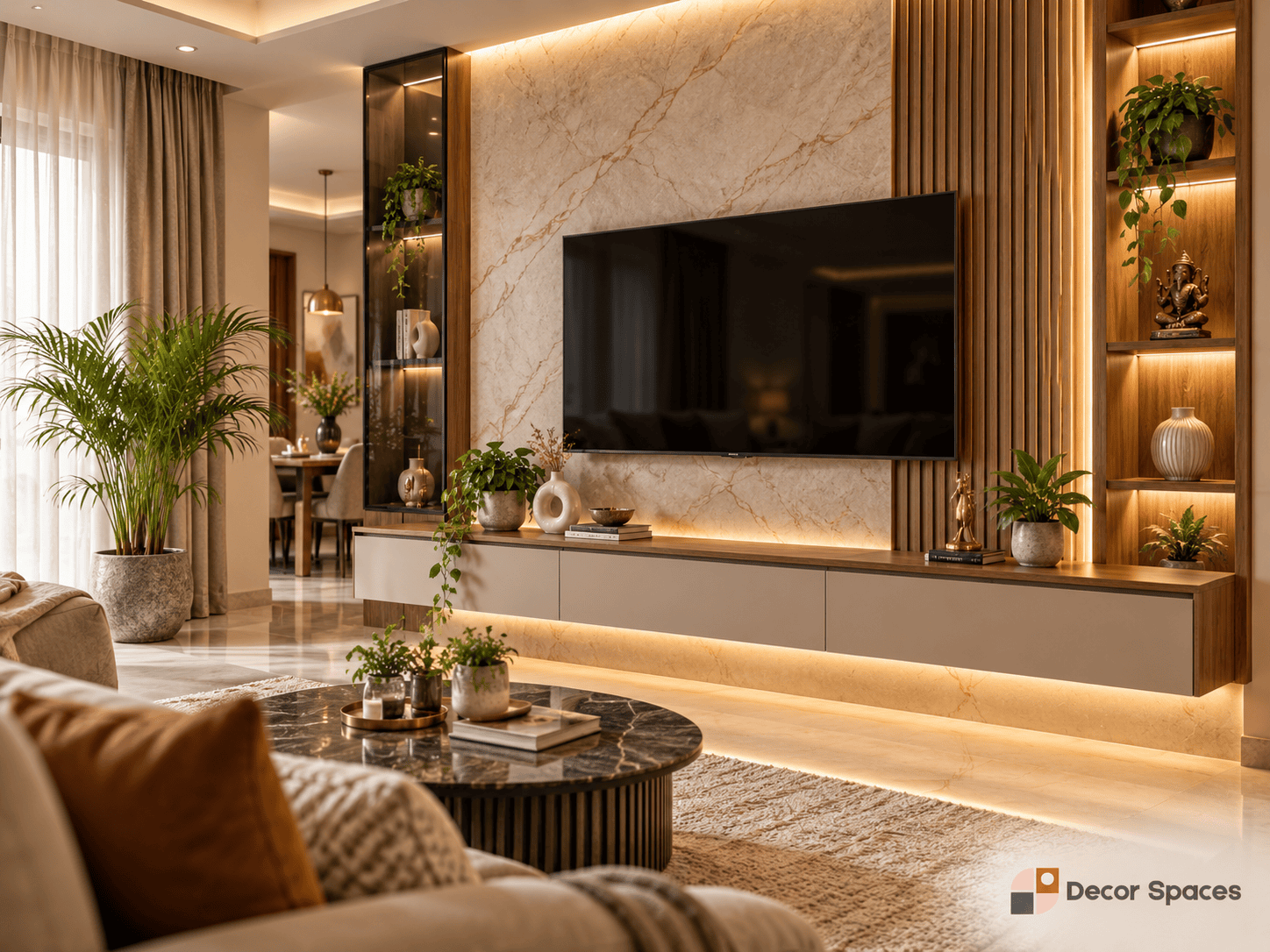
TV unit interior design in Chennai works best when the media wall is coordinated with the entire living space. An apartment hall may need one floating bottom cabinet and a subtle panel; a larger room may accommodate closed side storage, display shelves and layered lighting. In either case, the sofa, window, balcony entrance and nearby circulation help determine what belongs on the TV wall.
Four practical ways to build a TV wall without overcrowding it.
For TV unit interior design in Chennai, different layouts call for different storage arrangements. A larger wall is not an instruction to cover every inch with cabinetry.
Floating TV console
A wall-mounted bottom cabinet helps keep the floor visible. Use it for remotes, set-top boxes and accessories rather than storing unrelated household items.
Full TV back panel
A controlled laminate, wood-tone or stone-look backing creates a strong centre without extensive cabinets. Keep necessary mounting and cable access behind the panel.
TV unit with side storage
Useful when the living room genuinely needs enclosed storage. Keep the side unit proportional and leave access to switches, doors and curtains.
TV and display combination
A few open shelves can hold books or décor while closed sections hide cables and clutter. Spacing and cleaning access matter more than shelf count.
The six decisions that separate a good TV wall from an awkward one.
For TV unit interior design in Chennai, the room layout, device requirements and wall conditions should be checked together, rather than approved as separate items.
Position for a comfortable view
Check how the TV faces the primary sofa and who else watches from the side. Eye level changes with seating height and whether the TV is watched upright or reclined.
Check reflections first
Daytime glare can make a beautiful TV wall frustrating. Look at direct and reflected sunlight before choosing the TV wall or adding shiny finishes.
Plan power and data points
Identify socket positions for the screen, set-top box, router, speaker system and backup power. Allow routing for cables without pinching or trapping them.
Check the mounting surface
Different wall types require different fixing methods. Confirm anchor locations, load capacity and access before placing decorative boards over the mounting zone.
Leave devices serviceable
Avoid fully sealing HDMI ports, routers, adapters and LED drivers. Even a neatly hidden setup should be simple to reach when equipment changes.
Ventilate enclosed equipment
Set-top boxes and other electronics can warm up. Leave usable ventilation openings and follow each device maker’s clearance instructions.
Let one finish lead. Let the others support it.
The easiest way to make a TV wall feel expensive is not necessarily to use more materials. Pick the central visual idea — a warm wood surface, a textured fluted feature or a calm light-toned panel — and keep surrounding details intentional.
When reviewing TV unit interior design in Chennai, compare full-room photographs rather than zoomed-in panel samples. The unit should relate to the sofa, curtains and flooring in the actual home.
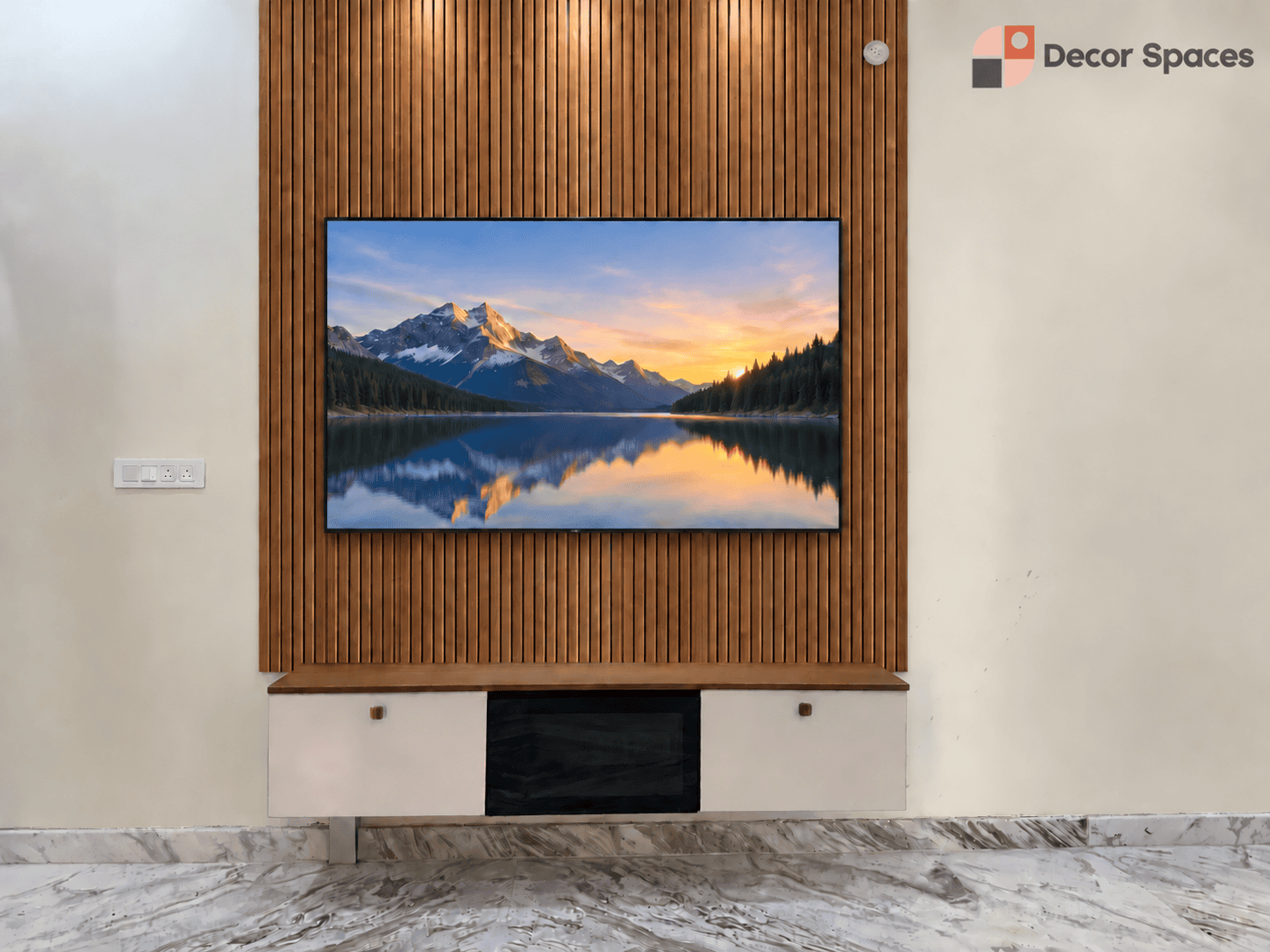
A neat wall is one where the everyday equipment has a place.
In TV unit interior design in Chennai, the screen is usually the easiest part. Power cords, set-top boxes, a router, speakers, charging accessories and remotes need a plan that works after the installation team has left.
For more detailed planning, see our electrical planning guide. A professional electrician should handle concealed and mains wiring.
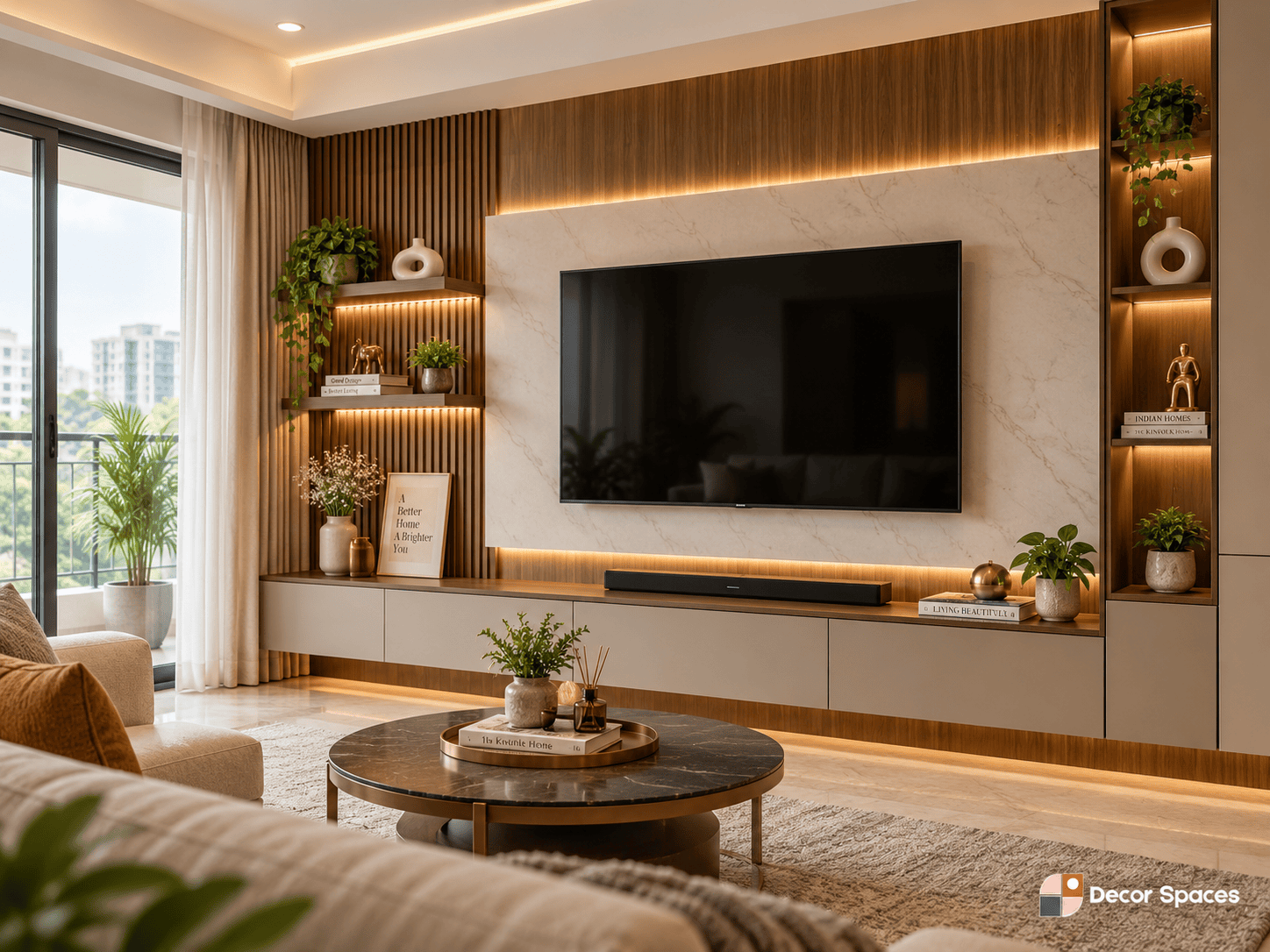
Bright windows, warm rooms and busy halls change the design details.
A TV wall that looks balanced at night must also remain usable during sunny afternoons and ordinary family life.
Control screen glare
Check strong windows and balcony doors before selecting glossy panels. Curtain layers or a different screen position may matter more than the panel finish.
Keep surfaces easy to clean
Dust can settle along flutes and display shelves. A compact apartment may be better served by smooth cabinetry with fewer exposed ledges.
Coordinate the AC location
A media wall should not block the AC service route, airflow or drainage lines. Decide both positions before false-ceiling or wall-panel work.
Inspect the wall first
Where dampness or seepage exists, treat the source before closing the wall with cabinetry. No board finish fixes an unresolved wet wall.
With TV unit interior design in Chennai, practical choices about glare, upkeep and wall conditions often improve the result more than extra decoration.
A sleek result comes from good trade-offs.
The right unit is not always the most elaborate one. These details help narrow down what belongs in your quotation.
Floating or floor-standing?
Floating units make cleaning easier visually but require confirmed mounting conditions. Floor-standing consoles may better suit certain walls or heavier storage.
Panelled or open wall?
A painted feature wall and slim console can be enough; a full back panel is most useful when it supports a specific design or conceals planned routing.
Closed or open storage?
Closed shutters hide cables and everyday items. Open shelves should be limited to things worth displaying and cleaning regularly.
Matte or glossy?
Matte or low-reflective finishes often help keep screen glare and fingerprints less noticeable in a frequently used room.
More lighting or fewer sources?
A restrained LED glow may be more comfortable than multiple bright strips positioned toward the screen.
One wall or mixed function?
Combining the TV, showcase, crockery unit or pooja area needs careful separation so each zone retains purpose and comfortable access.
Plan the features first. Price the actual wall.
There is no reliable single price for every TV unit interior design in Chennai. Cabinet length, panel material, hardware, electrical work, mounting requirements and on-site conditions can all change the scope.
Send the TV wall width, a room photo and your approximate budget. Decor Spaces can discuss which components genuinely add value before preparing an itemised quote.
From an empty wall to a room that feels finished.
TV unit interior design in Chennai should follow the measured site and your actual equipment, not a generic render copied into every apartment.
Share your space
Send the wall width, room photo, TV size and what needs to be stored.
Resolve the layout
Check seating, mounting, daylight and door or curtain clearances.
Choose finishes
Review materials, cabinet details, colour and restrained lighting options.
Confirm scope
Approve drawings and an itemised quotation before production.
Fit and review
Install the unit, organise cable access and check function and finish.
A quick checklist before fabrication begins.
Small coordination problems are easier to solve in the drawing stage than after a panel has been installed. Use these points when reviewing the proposed TV wall with your family or designer.
Keep the approved measurements, material selections and electrical plan together for installation.
Keep the TV wall connected to the full home.
For TV unit interior design in Chennai, a media wall works best when coordinated with the nearby seating, entrance and storage finishes.
TV Unit Interior Design in Chennai FAQs.
Practical answers about materials, installation and layouts.
What type of TV unit works best in a small Chennai apartment?
A slim floating bottom console with a restrained panel can work well when the room has limited space. The choice depends on viewing distance, wall condition, furniture and storage needs.
Do you design TV units for 2 BHK and 3 BHK homes?
Yes, TV unit designs can be planned for different home sizes. The exact cabinet size, panel proportion and finish are based on the measured living room rather than the number of bedrooms alone.
Are fluted panels or marble-look laminates good for TV walls?
Both can work. Fluted panels provide texture, while a light stone-look surface can keep the wall calm. Choose a finish that works with the furniture and does not create distracting reflections.
Can a TV unit hide wires and still allow servicing?
Yes. Plan cable routes, access points and suitable ventilation before cladding the wall. Equipment and wires should remain reachable if devices are replaced later.
Is a floating TV unit safe on every wall?
No. The wall substrate, fixing method, load and mounting bracket must be reviewed. Follow the TV manufacturer’s mounting requirements and involve qualified professionals where needed.
What does TV unit interior design cost in Chennai?
The cost depends on dimensions, board grade, surface finish, shutters, hardware, lighting and installation conditions. Request a quote based on your site measurements and approved scope.
Can Decor Spaces build just a TV unit?
You can enquire about a standalone TV unit requirement or coordinate it with full living-room or home interior work. Availability and scope are confirmed during consultation.
Have a wall in mind? Make it worth looking at — screen on or off.
For TV unit interior design in Chennai, share your wall photo, TV size and preferred finishes. We’ll help plan a proportionate media wall with useful storage and clean cable access.