Wardrobe internal design ideas built around what you own
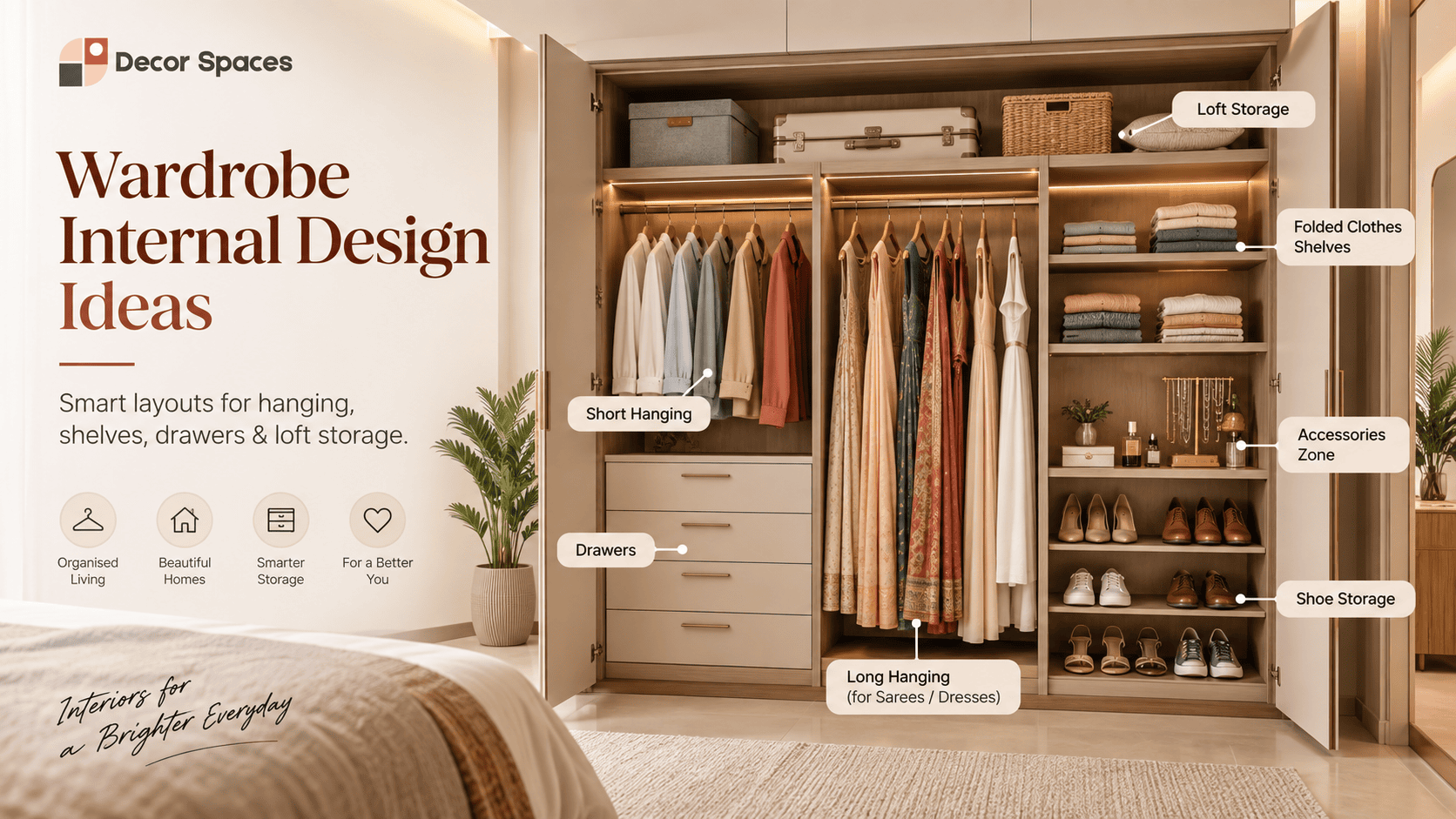
Wardrobe internal design works best when the storage is planned around your actual clothes and daily routine. The goal is not to create the most compartments, but to balance hanging, shelves, drawers and loft space so every section has a clear purpose.
Wardrobe internal design guide: on this page
Start with your clothes — not a template
A practical wardrobe internal design should follow what gets hung, folded, stacked and stored in drawers. Two people can have the same 6 ft wardrobe and still need completely different internal layouts.
Daily-use items stay reachable
Frequently used hanging, shelves and drawers should sit within easy reach.
Long clothes get their own bay
Dresses, sarees and coats need a taller uninterrupted section without forcing the whole wardrobe to be long-hang.
Drawers solve small-item clutter
Accessories, innerwear, watches and smaller items are easier to organise in dedicated drawers.
Lofts handle occasional storage
Luggage, spare bedding and seasonal items belong above the daily-use zones.
Wardrobe internal design layouts for 4 ft, 6 ft and 8 ft wardrobes
These are planning concepts, not fixed production drawings. Final divisions should follow actual carcass width, shutter system and user requirements.
Compact single-user layout
- One short-hanging bay
- One shelf stack
- 2–3 drawers
- Full-width loft
- Best for moderate storage needs
Balanced everyday layout
- Short-hanging section
- Long-hanging bay
- Folded-clothes shelves
- Accessory drawers
- Loft / suitcase storage
Shared or high-storage layout
- Separate user zones if useful
- Multiple hanging sections
- Larger shelf bank
- Drawers and shoe zone
- Optional dresser / mirror
Different wardrobes need different internal proportions
Saree-focused wardrobe
Combine a taller hanging section with folded-saree shelves, shallow drawers for blouses and accessories, and a loft for occasional-use items.
Men’s wardrobe
Short hanging often does more work for shirts, trousers and jackets. Add folded shelves and smaller accessory drawers.
Shared couple wardrobe
Divide hanging and shelves by actual clothing volume instead of splitting the wardrobe exactly 50:50.
Kids’ wardrobe
Use adjustable shelves, accessible drawers and lower hanging positions so the layout can evolve as the child grows.
Guest-room wardrobe
Keep it simple: hanging, a few shelves, one drawer and spare linen space are usually enough.
Wardrobe + dresser
Reserve part of the wall for a mirror, shallow drawers and grooming items instead of forcing every inch into clothing storage.
Wardrobe internal design ideas in practice
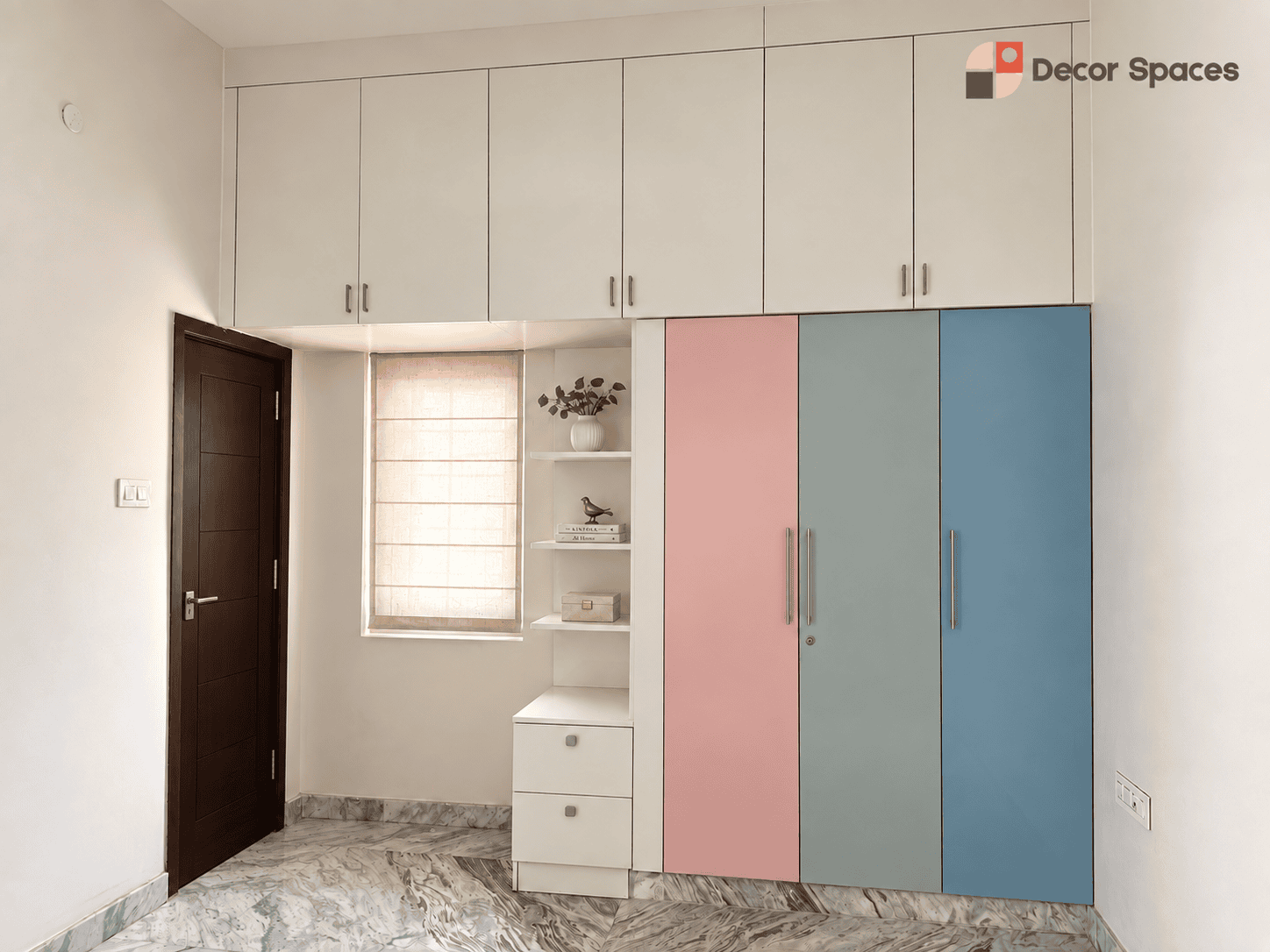
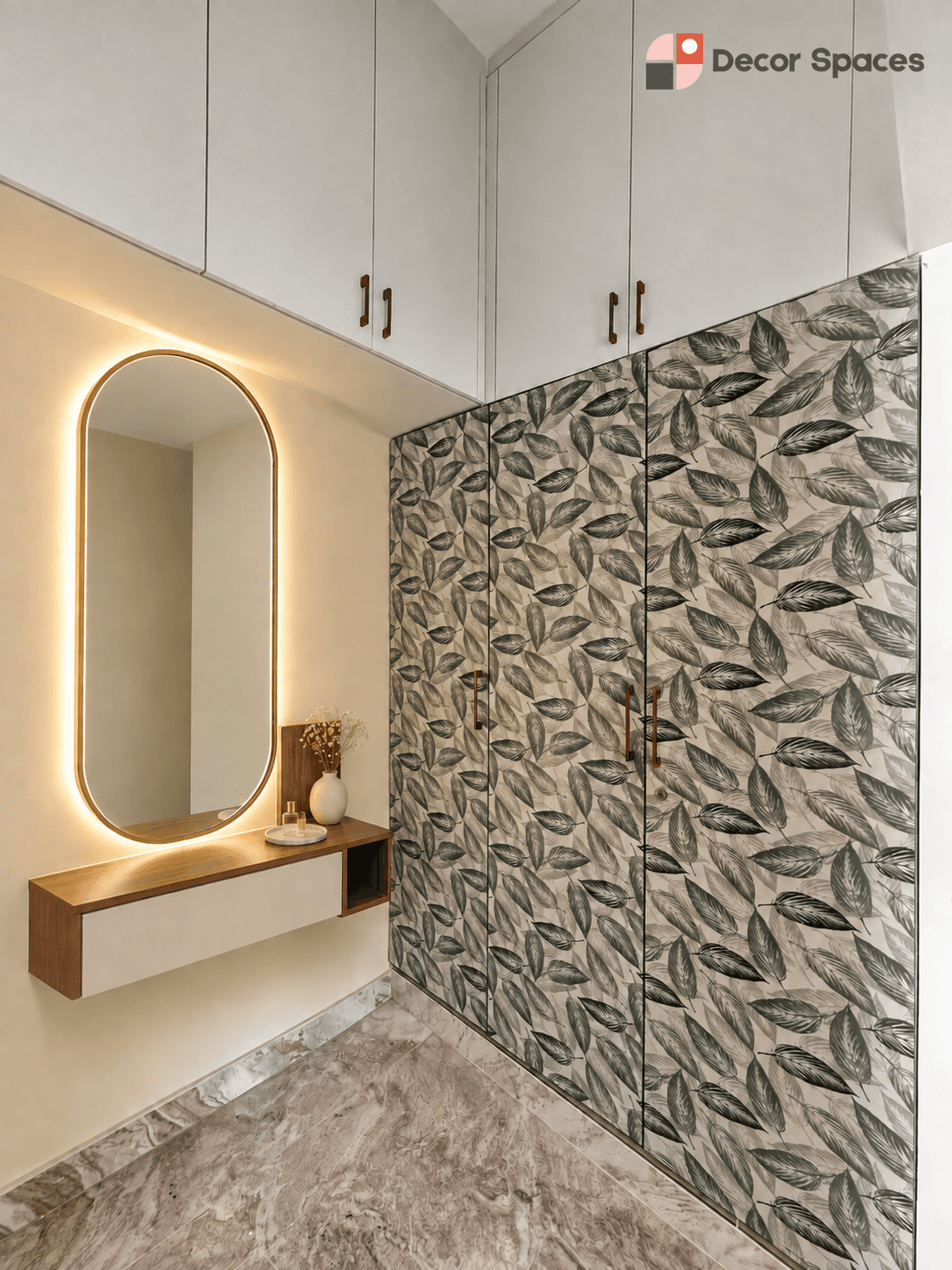
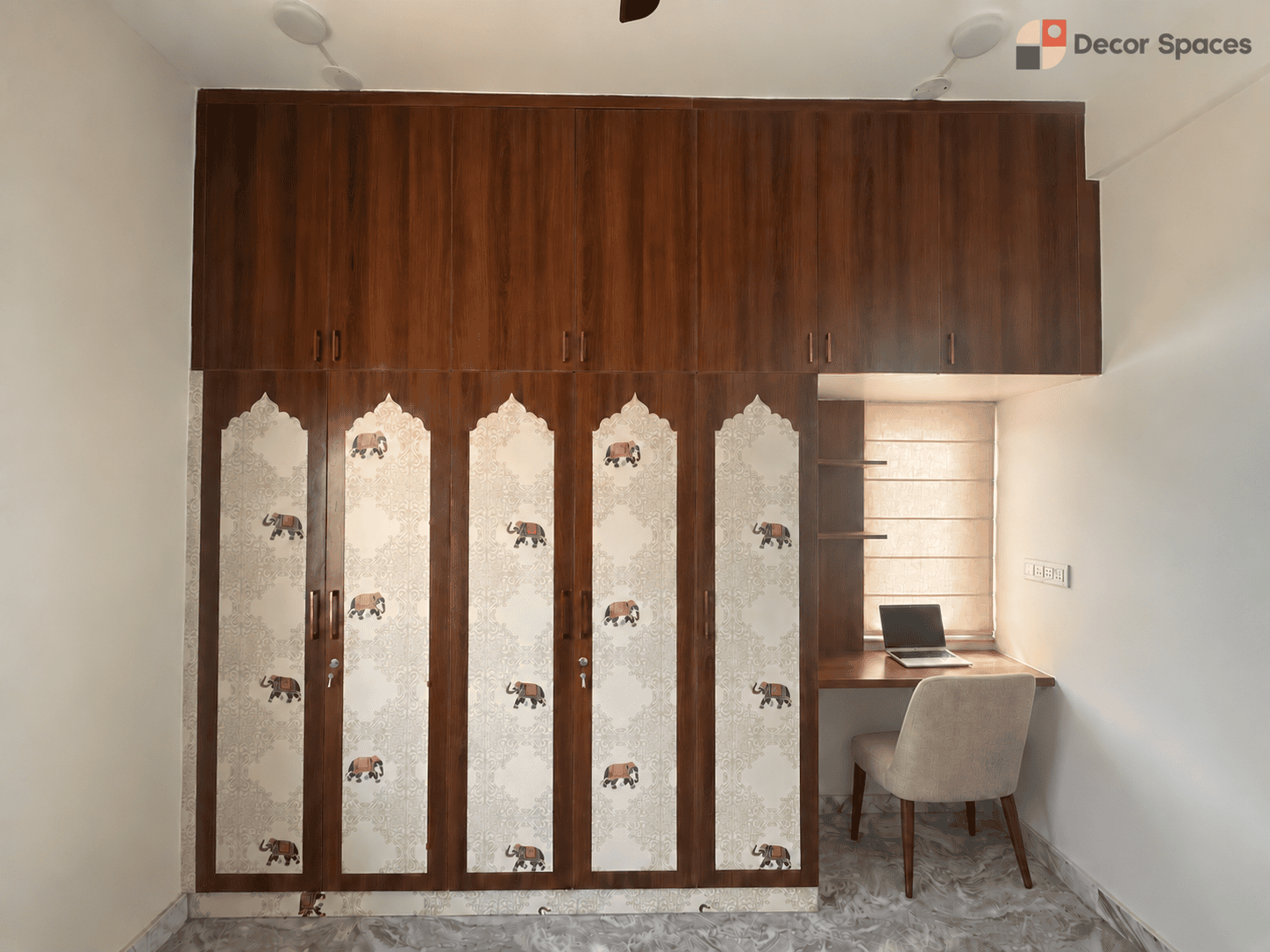
Use these references to compare different storage approaches before finalising your own layout. The right internal arrangement should still be customised to your clothes, room size and door type.
What can go inside a well-planned wardrobe?
Short hanging
For shirts, jackets, blouses and folded trousers.
Long hanging
For dresses, sarees, coats and other long garments.
Adjustable shelves
Useful when folded-clothes storage needs change over time.
Shallow drawers
For jewellery, watches, innerwear and smaller accessories.
Loft storage
For luggage, extra bedding and seasonal items.
Accessory pull-outs
Trouser racks, belt pull-outs and organiser trays can improve convenience but add hardware cost.
For general product and material standards in India, see the Bureau of Indian Standards (BIS).
The internal layout only works when the wardrobe dimensions are right.
Check depth, hanging heights, shelf spacing, loft size and bedroom clearances before finalising the layout.
Layouts that look neat but waste storage
Too many equal shelves
Shirts, jeans, bedding and bags need different vertical space.
Too much long hanging
If most clothes are folded, tall hanging bays waste useful vertical storage.
Drawers placed too low
Daily-use drawers near floor level mean constant bending.
No accessory zone
Small items end up scattered across shelves without dedicated shallow storage.
Loft used for daily clothes
High storage should be reserved for occasional items.
Designing before measuring
Internal layouts should follow actual room and carcass dimensions.
Build the rest of your wardrobe plan
Wardrobe internal design questions
Plan the inside before choosing the wardrobe finish.
Share your room measurements and storage needs for a layout designed around how you use it.