Apartment Interior Work Rules Bangalore homeowners should clear before day one.
NOC, worker entry, work timings, service-lift access, material movement, floor protection and debris rules can affect an apartment interior project before the first cabinet reaches site. The important part: there is no single rulebook used by every Bangalore apartment association.
The practical challenge with apartment interior work rules Bangalore homeowners face is that private interiors interact with shared lifts, corridors, security systems, neighbours and common services. Karnataka apartment law allows bye-laws and administrative rules to govern use of common areas and prevent unreasonable interference between residents. That is why a society can have its own contractor-entry, lift-use and renovation procedures even though there is no universal Bangalore timetable for every complex.
Do not copy another society’s rules. Get yours in writing.
Apartment interior work rules Bangalore associations use can differ building by building. Before scheduling labour or material delivery, ask the facility manager or association for the current interior / renovation SOP, form or circular.
Ask what needs approval
Some complexes ask only for a written intimation for modular work, while renovation, plumbing or structural changes may require additional documents.
Ask which rules affect the schedule
Working days, drilling windows, lunch-hour restrictions, Sundays and public holidays can change the installation sequence.
Ask which rules affect delivery
Service-lift booking, truck entry, basement height, loading areas and approved delivery slots can determine how large panels reach the flat.
Clear the paperwork before booking the crew.
For apartment interior work rules Bangalore homeowners need to follow, many complexes use an owner application, renovation intimation or NOC process before allowing workers and materials inside. The exact document name and requirements vary by association.
A practical submission usually identifies the apartment, owner, contractor, scope of work and expected period. If the association asks for worker identification, vehicle details, deposits or site-protection undertakings, collect them before the start date.
There is no universal “9 to 6” rule for every Bangalore apartment.
Apartment interior work rules Bangalore associations publish can set stricter day, time and noise windows for interior work. Some separate quiet tasks from drilling or cutting. Others restrict Sundays, holidays or lunch hours. Always follow the written rules for your property.
At the national level, the Noise Pollution Rules define night time as 10:00 p.m. to 6:00 a.m., and sound-emitting construction equipment must not be operated during night time in residential areas and silence zones.
Ask for the exact noisy-work window and plan these operations together rather than spreading them across the day.
Assembly, alignment and some finishing work may be permitted for longer hours, but only if the association allows it.
Never assume interior work is allowed. Confirm the permitted days before promising a completion date.
Inform immediate neighbours before intensive drilling or demolition, especially in occupied buildings.
Measure the route to the apartment, not only the rooms.
Apartment interior work rules Bangalore projects encounter often become logistical rather than design-related. A wardrobe shutter or long panel is useless if it cannot safely reach the apartment.
Service lift
Confirm car dimensions, door opening and weight limits before fabricating oversized shutters or panels.
Lift booking
Some complexes require a booked slot for material loading. Coordinate dispatch only after the slot is confirmed.
Basement / truck access
Check vehicle height, loading bay rules and where delivery vehicles are permitted to stop.
Corridor protection
Protect lift walls, floors, corners and apartment passages where the association requires it.
Large panels
Split long units into installable modules if stairs or lift dimensions cannot accommodate them safely.
Material storage
Do not assume panels or debris can remain in corridors, fire exits, lift lobbies or shared parking areas.


Modular furniture still needs site coordination.
Wardrobes, kitchens, TV units and study furniture may not alter the building structure, but they still affect sockets, plumbing, walls, floors and common-area access.
Do not treat columns, beams, slabs or structural walls as normal interior items.
If a proposed renovation affects structural elements, waterproofing, major plumbing or common services, stop and obtain the appropriate professional and association guidance before work proceeds. Structural decisions should never be improvised by a carpentry crew.
Renovation waste needs its own plan.
Under apartment interior work rules Bangalore properties use, modular installation waste and renovation debris may have separate handling requirements. Ask the association how waste must be bagged, moved, stored temporarily and removed from the property.
Bag before movement
Loose debris creates dust and can damage lifts and corridors. Follow the building’s prescribed packing and removal procedure.
Use the approved route
If the service lift or a specific staircase is designated for work materials, keep the crew to that route.
Clear common areas daily
Do not allow tools, waste or panels to block fire exits, lobbies or shared passages.
Plan around the building rules before production begins.
A good apartment schedule built around apartment interior work rules Bangalore associations set puts approvals, services and access before fabrication. That reduces the chance of finished furniture waiting outside because a gate pass, lift slot or electrical point is not ready.
Get rules
Collect the latest association interior / renovation SOP.
Measure
Measure rooms, lift, access route and fixed services.
Freeze services
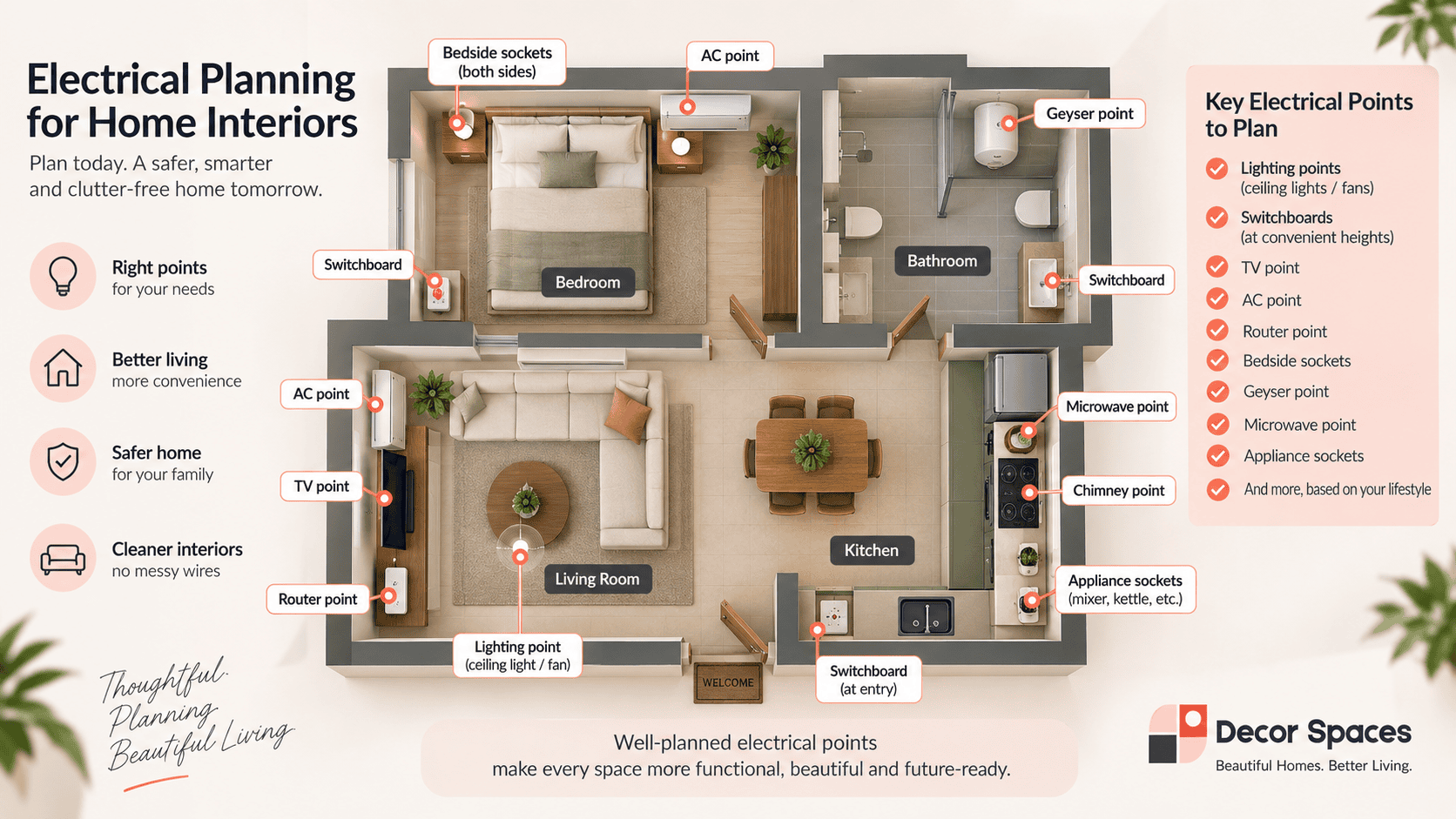
Finalise appliances, sockets, plumbing, AC and TV points.
Submit documents
Complete NOC, worker, deposit or gate requirements.
Book delivery
Coordinate service lift and material-entry windows.
Install
Sequence noisy work first, then assembly and finishing.
Eight mistakes that can delay a Bangalore apartment interior project.
Most of these are preventable before the first site day.
Assuming all societies use the same work hours
They do not. Get the permitted timings from your own management office.
Dispatching material before lift approval
A delivery slot and an installation slot are not always the same thing.
Ignoring lift dimensions
Oversized panels may need redesign or on-site jointing.
Submitting worker IDs on the start day
Gate registration can take time; complete it before the crew arrives.
Not separating noisy and quiet tasks
Group drilling and cutting into the approved noisy-work window.
Leaving common-area protection to chance
Clarify who protects and restores lifts, corridors and floors.
Starting carpentry before electrical corrections
Late switch movement causes cut-outs, patchwork and rework.
Mixing renovation cost with furniture cost
Demolition, plumbing and civil repairs should be visible as separate scope.
What to confirm one week before interior work starts.
Use this as a coordination checklist, then replace any item with your apartment association’s actual written requirement if it differs.
For the legal framework around apartment bye-laws and common areas, refer to the Karnataka Apartment Ownership Act, 1972. For national noise rules, see the Central Pollution Control Board.
Use this rules checklist with your design and budget planning.
Permissions and site logistics are only one part of apartment planning. These related Decor Spaces guides cover design, cost, electrical work and room-specific decisions.
Apartment Interior Work Rules Bangalore FAQs.
Do I need an NOC for interior work in a Bangalore apartment?
There is no single Bangalore-wide NOC format that applies to every complex. Many apartment associations require written intimation or approval before workers and materials enter. Ask your association or facility manager for the current procedure.
What are the allowed interior work timings in Bangalore apartments?
Apartment work timings are normally set by the individual association and can be stricter for drilling, cutting, Sundays and holidays. National noise rules define night time as 10 p.m. to 6 a.m. and prohibit sound-emitting construction equipment during that period in residential areas, but your society may set a much narrower window.
Can I use the passenger lift for interior materials?
Do not assume so. Many buildings designate a service lift or specific material-movement procedure. Confirm the permitted lift, booking system, dimensions, protective requirements and time slot before dispatch.
Can an association ask for worker ID details?
Many gated communities use security registration or gate-pass systems for contractors and workers. The exact ID, photograph and registration requirements depend on the property.
Can I break an internal wall during renovation?
Do not proceed until the wall’s structural role is established and the required professional and association approvals are clear. Columns, beams, slabs, shear walls and other structural elements should never be altered as routine interior work.
Who is responsible for common-area damage during interior work?
Responsibility depends on the association rules and contractor agreement. Clarify protection, deposits, damage reporting and restoration responsibilities before work starts.
How should renovation debris be removed?
Follow the apartment’s approved procedure for bagging, storage, lift use, timing and removal. Debris should not block corridors, lift lobbies, fire exits or other common areas.
What should I finalise before carpentry production begins?
Finalise room layouts, appliances, electrical points, plumbing dependencies, AC positions, wardrobe dimensions, material finishes and the apartment’s delivery / installation rules before production.
Planning interiors in a Bangalore apartment? Clear the building rules before the build.
Share your apartment location, floor plan and project stage. We can structure the room scope, electrical dependencies and installation sequence around the site’s practical constraints.