Crockery Unit Design in Chennai made for everyday dining.
Beautiful dinnerware deserves a considered place — but so do your daily plates, serving bowls and occasional glassware. We help plan crockery units around usable shelf depths, opening clearances, easy-clean finishes and the dining space you actually have.
Crockery unit design in Chennai often involves a simple challenge: dining spaces are shared with living areas, passageways or compact kitchens. One tall display cabinet can overwhelm a small wall; a slim sideboard may do the job better. Rather than choosing a design by looks alone, start with the items that need storing, your existing dining-table position, and the space available to open shutters and drawers comfortably.
6 smart crockery-unit layouts for different homes.
For crockery unit design in Chennai, these are six distinct arrangements, not six colour variations. Choose a layout according to room dimensions, storage volume and how the unit will be used.
Full-height glass display
A floor-to-ceiling look can organise showpieces and dinner sets in one visual feature. Mix glazed upper sections with closed lower storage to keep everyday clutter away from display glass.
STATEMENT WALLLow sideboard crockery unit
A lower cabinet suits walls where a tall display would feel heavy. The top can serve as a controlled display or serving surface, while drawers and cupboards handle daily crockery.
EASY ACCESSCompact wall-mounted cabinet
Where floor space is needed for chairs or cleaning, a correctly engineered wall-hung unit can keep essential crockery off the floor. Verify wall type, fixing capacity and load first.
SMALL FOOTPRINTCorner crockery cabinet
A corner unit can reclaim an otherwise awkward junction, but doors and internal shelf access need careful design. Not every corner is worth filling if it narrows circulation.
AWKWARD CORNERSPartition-integrated display
An open-plan living–dining room may benefit from a crockery display incorporated into a divider. Keep sightlines, lighting, structural anchoring and both-side access in mind.
DUAL PURPOSEMixed open and closed storage
An open centre niche for attractive pieces, glazed shelves above and concealed cabinets below can balance styling with real storage. It is often more practical than an all-glass elevation.
BALANCED STORAGEFour design references for different room layouts.
Explore four crockery unit design in Chennai references, from full-height glass displays to compact cabinets with open shelves and concealed storage. Consider how each layout would fit your dining space and everyday use.
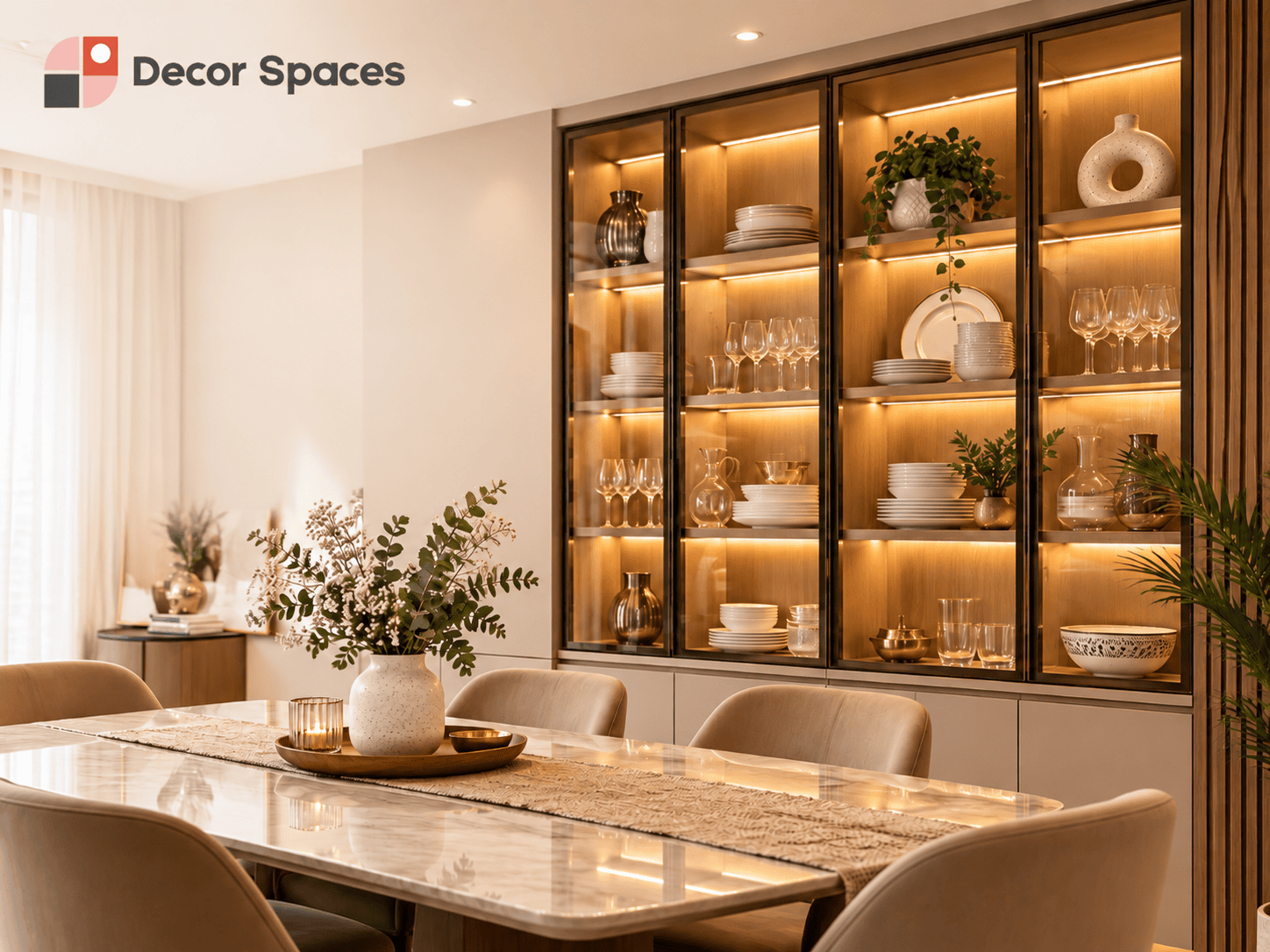
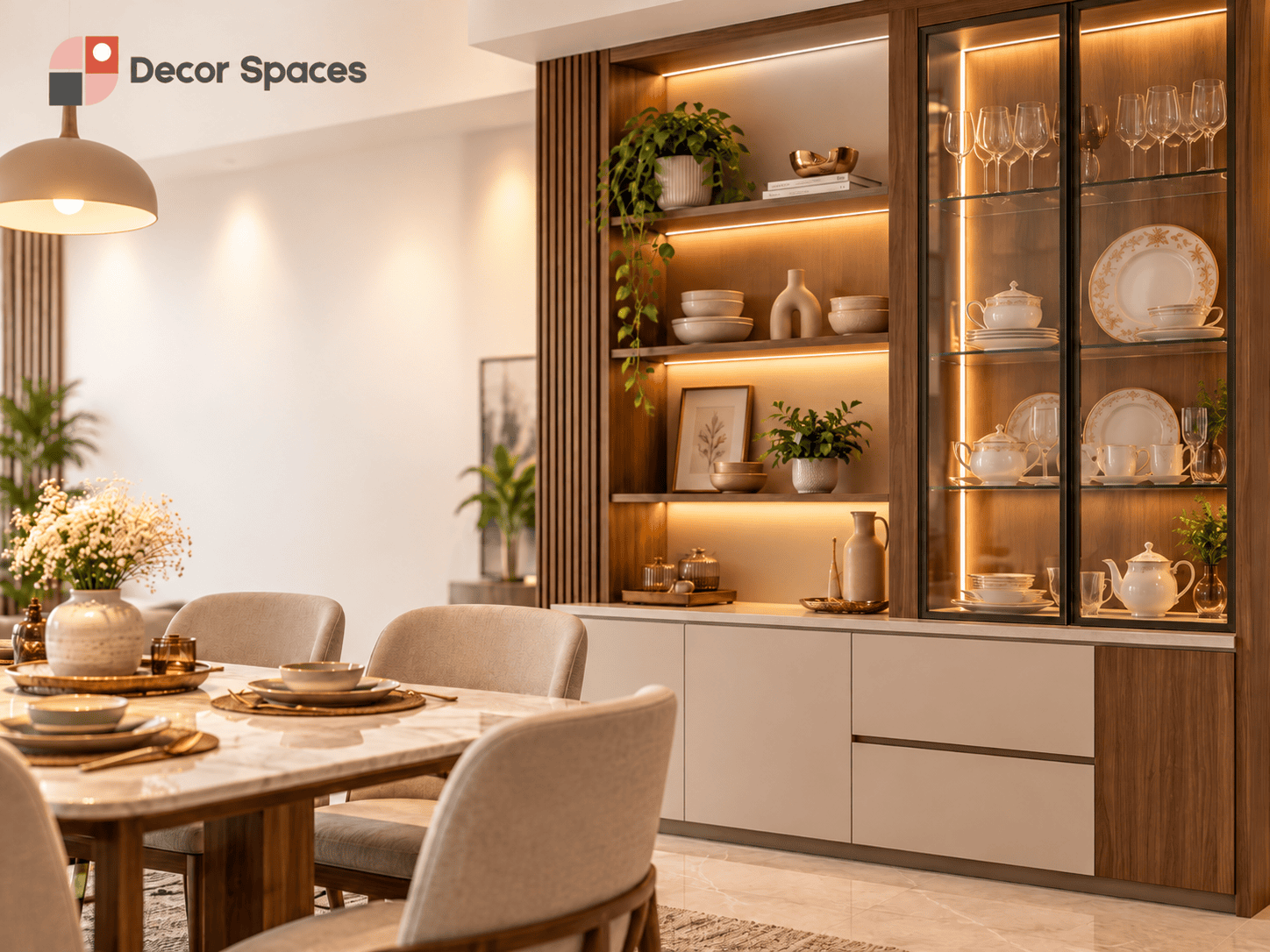
The shelves should fit your actual collection.
Before committing to finishes, sort crockery into daily, occasional, display-only and heavy pieces. Every group needs a sensible height and a safe shelf arrangement.
A crockery unit does not have to put everything behind glass. Frequent-use mugs and plates are often better in reachable closed drawers or cupboards. Reserve the highest shelves for lightweight, occasional items, and allow breathing room between display pieces rather than filling every inch.
For crockery unit design in Chennai apartments, we also check whether the sideboard interrupts the dining path, whether a table chair can move back comfortably, and whether a cupboard door hits adjacent furniture.
Display details worth planning, not just admiring.
These designs highlight how open niches, glass displays and fluted finishes can work together. Compare the cabinet proportions and practical storage, not only the decorative styling.
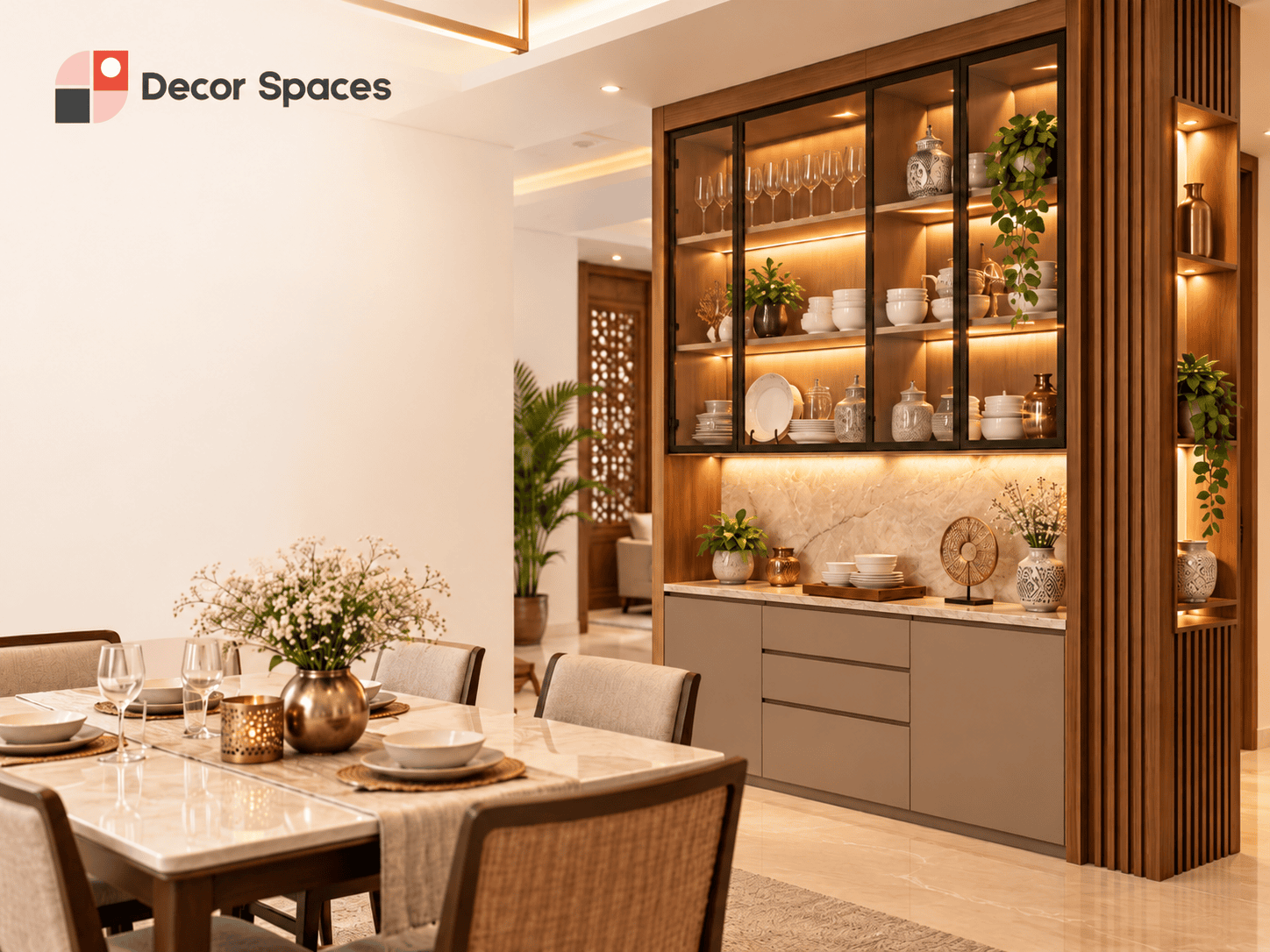
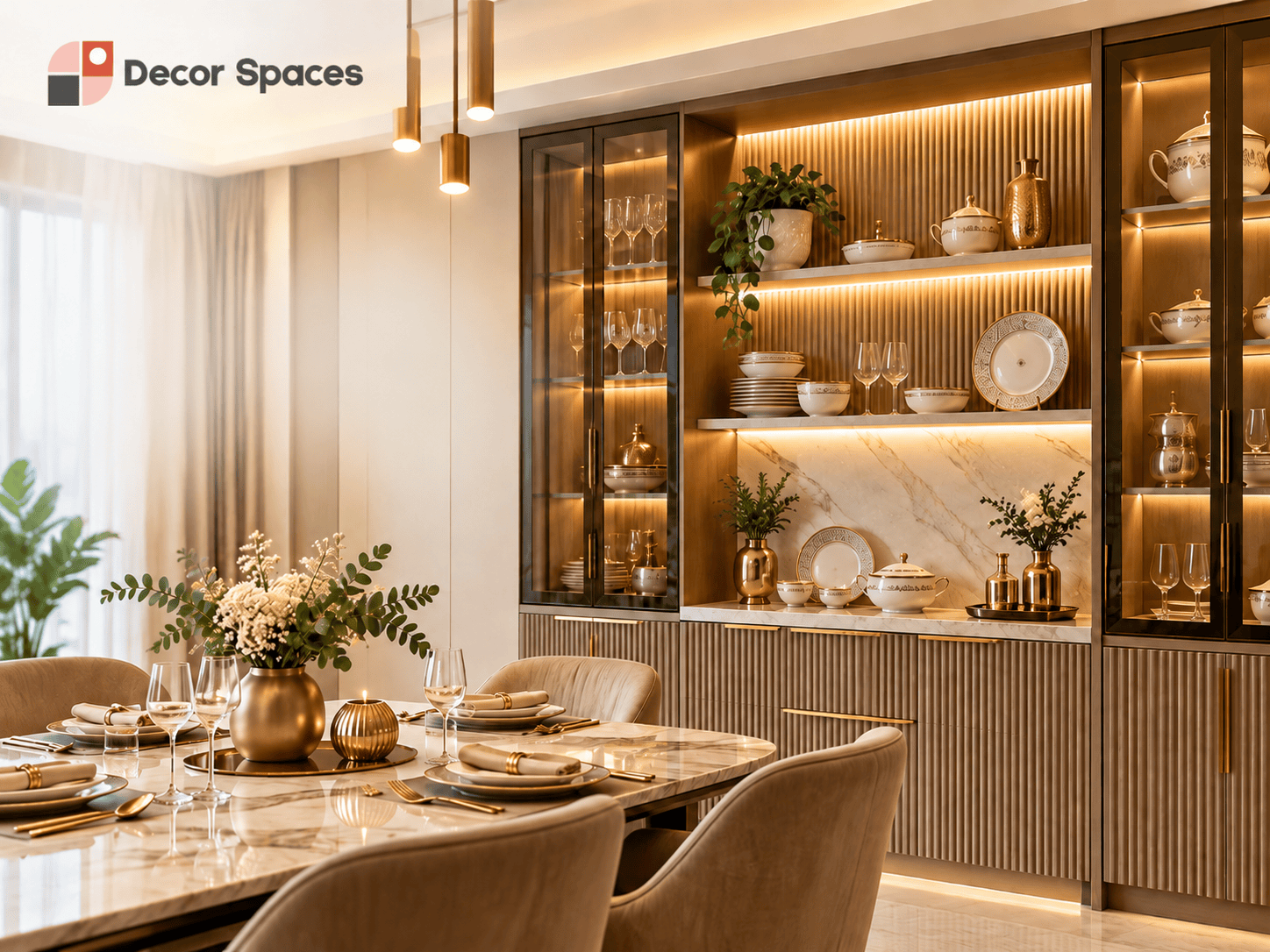
Choose the finish for what happens after installation.
Crockery unit design in Chennai needs materials suited to dining activity: fingerprints on glass, frequent shutter movement, food-related spills and the weight of stacked dishes. Each material should have a practical reason.
Glass and glazing
Use appropriate safety glazing and proven door hardware for the selected sizes. Consider fingerprint visibility, reflections and cleaning access. Do not treat every glass panel as interchangeable.
DISPLAY SHUTTERSCarcass and shelf structure
Discuss specified board material, shelf spans, backing, load capacity, wall condition and fasteners. A heavily loaded long shelf needs suitable support.
STRUCTURAL CHOICELaminate or other surface finish
Consider wipe-clean durability, humidity exposure, colour consistency and how the surface joins at corners. More ornate surfaces can demand more upkeep.
CLEANABILITYDrawer and shutter hardware
Ask what hinge, runner and soft-close hardware is included, whether replacement parts are available, and what adjustment access remains after installation.
DAILY MOVEMENTLED cabinet lighting
Provide a practical wiring route and a way to service drivers or strips. Confirm colour temperature, glare, switch position and whether lighting is quoted.
SERVICE ACCESSHandles and edges
Consider finger clearance, comfortable grip, easy-to-clean profiles and rounded exposed edges in family homes. Confirm visible trims in the final elevation.
FINISH DETAILSThe decisions that make a display safe and usable.
When reviewing crockery unit design in Chennai, remember that a good-looking render cannot verify an anchored tall cabinet, the electrical route or the opening arc of a glass door. These should be resolved during site and installation planning.
Measure the dining path
Include actual chair pull-back and nearby room traffic, not only the empty wall width shown on a plan.
Check wall and fixing suitability
Tall or wall-hung units require appropriate stability and fixing details based on the wall substrate and cabinet load.
Keep heavier items lower
Locate heavy serving sets where handling is safer and avoid overloaded, unsupported display shelves.
Plan access to electrical parts
Coordinate lighting supply, switches and maintenance access before panels are closed.
Test shutter and drawer movement
Confirm door swings, hinges and pull-out paths against actual dining furniture.
Review glass and cleaning details
Specify suitable glazing, stable shelves and accessible cleaning clearances around glass-front displays.
How a crockery unit fits the local home.
For crockery unit design in Chennai, a dining wall near a kitchen may experience cooking residue, moisture and heavy daily use. A unit in a living–dining space may be more about quiet presentation and easy movement.
Compact apartments
Prioritise a measured footprint, sensible shutter orientation and closed everyday storage. A wide low unit may feel lighter than a tall full-wall display.
SPACE FIRSTOpen living–dining plans
Use consistent finishes and careful lighting so the crockery storage feels integrated, without becoming an unwanted visual barrier.
ONE COHESIVE HOMENear-kitchen placement
Specify surfaces and details that are practical to wipe clean. Do not place delicate finishes or lighting where moisture and heat exposure are unsuitable.
MAINTENANCEHumidity tolerance depends on the selected materials and detailing, not only a product label. Review edge sealing, proximity to washing areas and the maintenance requirements of the specific finish.
What should a crockery-unit quotation actually include?
For crockery unit design in Chennai, we do not publish a flat per-foot price for every cabinet configuration because display glass, lighting, hardware and the amount of storage can change the specification substantially.
Compare like-for-like quotations. An apparently inexpensive unit may omit the glass, lighting, drawer fittings or installation work that appears in the final reference image.
From a display idea to a working cabinet.
Crockery unit design in Chennai should turn the household’s real storage needs into a measured, buildable plan.
Understand the collection
List daily items, special sets, large platters and accessories that need storage.
Measure the dining space
Capture wall dimensions and the actual path around tables, chairs and nearby doors.
Confirm the right layout
Choose a full-height, low, partition, corner or mixed-storage option that suits the room.
Specify materials and lighting
Review shutters, shelving, glazing, hardware, switches and cleanability.
Review a clear quotation
Confirm elevations, materials, inclusions, exclusions and installation details.
Install and test access
Inspect stability, door movement, lighting operation and how every shelf will be used.
Will it still look good when it is full?
The biggest design mistake is to plan a crockery unit around a styled reference image without accounting for the weight and volume of real crockery. Test the proposed shelves, openings and walking space using the dishes you own and the furniture you use every day.
If you are comparing drawings or quotes, use these eight practical checks before approval.
Review My Cabinet PlanPlan your crockery storage as part of the whole home.
These existing Decor Spaces pages cover adjacent design decisions without repeating this crockery-specific guide.
Crockery Unit Design in Chennai FAQs.
Answers to common questions about apartment layouts, glass display shutters, storage, lighting and costs.
Where should I place a crockery unit in a Chennai apartment?
Choose a wall close enough to the dining area for easy use but outside chair pull-back and main walking paths. A compact sideboard or partition-integrated unit can work when a full-height cabinet would be too bulky.
Is a full-glass crockery cabinet practical for daily use?
It can be useful for display, but glass surfaces and visible shelves need regular cleaning and organised contents. Many households benefit from glazed upper shelves paired with concealed everyday storage below.
Can a crockery unit be made in a small dining area?
Yes, provided there is adequate wall space and safe access. A low cabinet, narrow wall unit or limited open display may suit the space better than a full-wall feature. Final dimensions depend on a measured site plan.
Which is better: sliding glass shutters or hinged doors?
Neither is universally better. Consider cabinet width, access, usable opening, glass weight, hardware specification, cost and the distance to dining furniture. Choose based on the actual elevation.
What type of lighting works inside a crockery unit?
Soft, well-positioned cabinet LEDs can highlight dishes without glare. Plan safe electrical work, driver access, a convenient switch and a serviceable lighting layout before the cabinet is built.
How much does crockery unit design in Chennai cost?
The cost depends on cabinet dimensions, number of shelves and drawers, board and finish specification, glazing, profiles, lighting, installation and wall conditions. Request an itemised project-specific quotation.
Can I combine a crockery unit with a partition or sideboard?
Often, yes. A mixed-use unit can divide living and dining functions while holding crockery, but it needs careful stability, proportion, maintenance access and circulation planning.
A better cabinet starts with what you store.
Share your dining-area dimensions, a photo of the available wall and the types of dishes you use. We can discuss a crockery unit that fits your layout and your day-to-day routine.