HDF — High Density Fiberboard, Explained & Compared
There’s genuine confusion around high density fiberboard in the Indian furniture market — and clearing it up first will save you from asking a supplier for the wrong material. Here’s what HDF actually is, and what you probably actually mean if you’re searching for it.
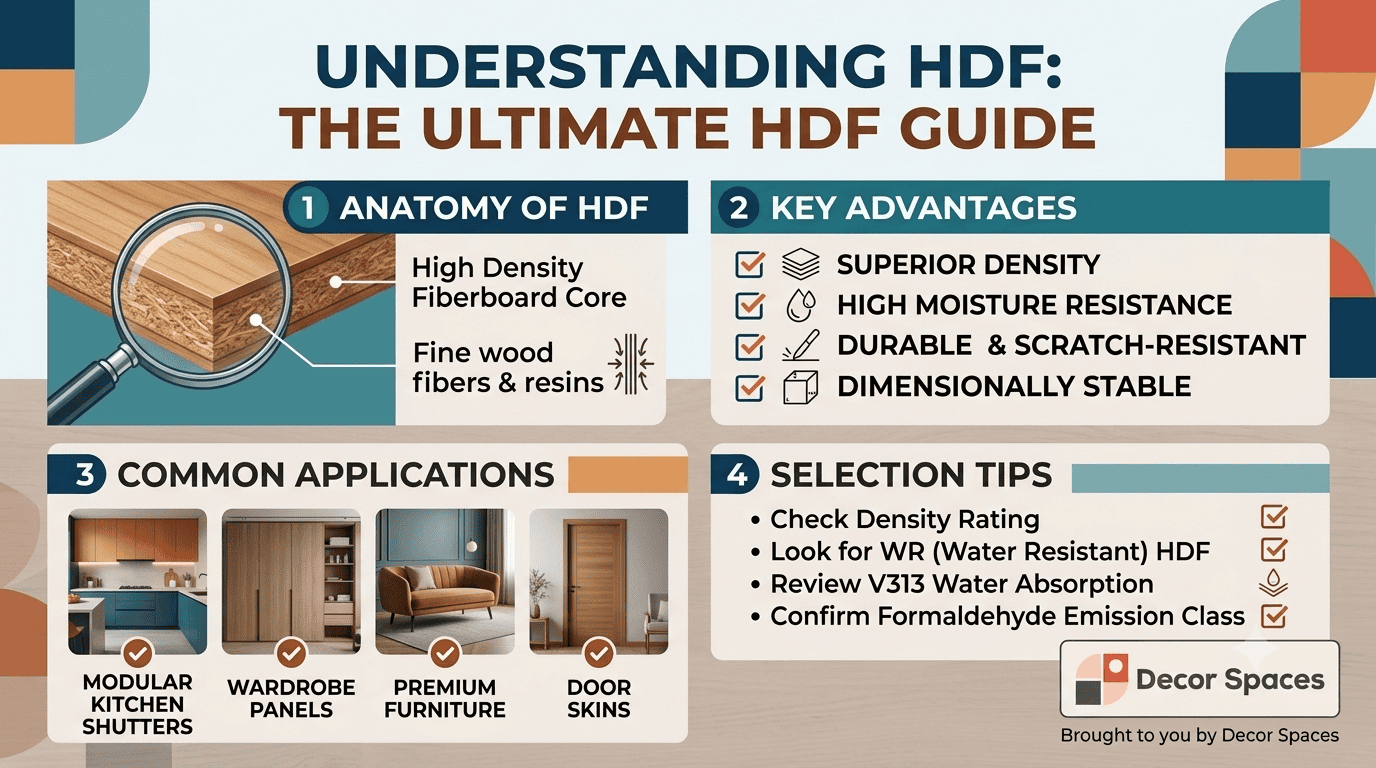
HDF simply describes a density level — a harder, more rigid fiberboard than standard MDF. If you’re actually looking for a moisture-resistant board for furniture in India, you almost certainly want HDHMR, the commercially available term for that specific product.
HDF: What High Density Fiberboard Actually Is
HDF is manufactured the same fundamental way as MDF — wood fibres compressed with resin under heat and pressure — but pressed to a significantly higher density. This makes HDF harder and more rigid than standard MDF, though also somewhat more brittle and prone to chipping at edges if not handled carefully during cutting and installation.
HDF vs HDHMR vs MDF: Clearing Up the Confusion
| Term | What It Describes | Common Use |
|---|---|---|
| MDF | Standard density fiberboard | Painted furniture, decorative panels |
| HDF | Higher density than MDF | Laminate flooring base, pegboards, door skins |
| HDHMR | High density + moisture-treated | Kitchen and wardrobe shutters |
The genuine source of confusion: HDHMR is technically a specific type of high-density fiberboard, which means it’s accurate to call it “high density fiberboard” too — but in the Indian furniture retail market, “HDHMR” is the term actually used when buying moisture-resistant boards for cabinetry, while plain “HDF” is more associated with flooring underlayment and thin panel applications.
Not sure which fiberboard type your project actually needs? Get a clear, honest recommendation.
See our interior design services →Where HDF Is Genuinely Used
- Laminate flooring core — HDF’s rigidity and density suit it well as the structural base layer under a laminate wear surface.
- Pegboards and thin backing panels — its hardness works well for thin panels that still need structural rigidity.
- Door skins — a thin, smooth HDF layer is sometimes used as the facing on hollow-core doors.
- Furniture backing panels — the back of a wardrobe or cabinet, where extreme moisture resistance isn’t required but rigidity is useful.
If you’re specifying material for kitchen shutters, wardrobe doors, or anything needing moisture resistance, ask for HDHMR by name — it’s the material actually sold for that purpose. Save the term “HDF” for flooring or backing-panel conversations specifically, where it’s the more accurate and commonly stocked term.
For furniture-specific boards, see our HDHMR guide or MDF guide. For the layered-veneer alternative entirely, our plywood guide covers that material family.
Get the right board material specified correctly, first time — free site visit, itemised quote.
Book Free Site Visit →FAQs
What is HDF or high density fiberboard?
HDF is an engineered wood panel made the same way as MDF — compressed wood fibres bound with resin — but pressed to a higher density, making it harder and more rigid, though more brittle than MDF.
What is the difference between HDF and HDHMR?
HDF describes the density level. HDHMR specifically refers to a high-density board also treated for moisture resistance. In Indian furniture retail, HDHMR is the term used when actually looking for a moisture-resistant board for cabinetry.
Is HDF used for furniture in India?
HDF is more commonly used as the base layer for laminate flooring, pegboards, and thin door skins rather than a primary furniture panel material. For furniture, HDHMR is the more relevant material.
Related reading: HDHMR guide · MDF guide · Plywood guide