BWR Plywood — Meaning, Uses & Price
The BWR plywood meaning often gets confused with BWP, and the two really are close cousins — but the difference between them shapes a real, practical decision for most home interior projects. Here’s what BWR actually is, and why it’s often the smarter default choice.
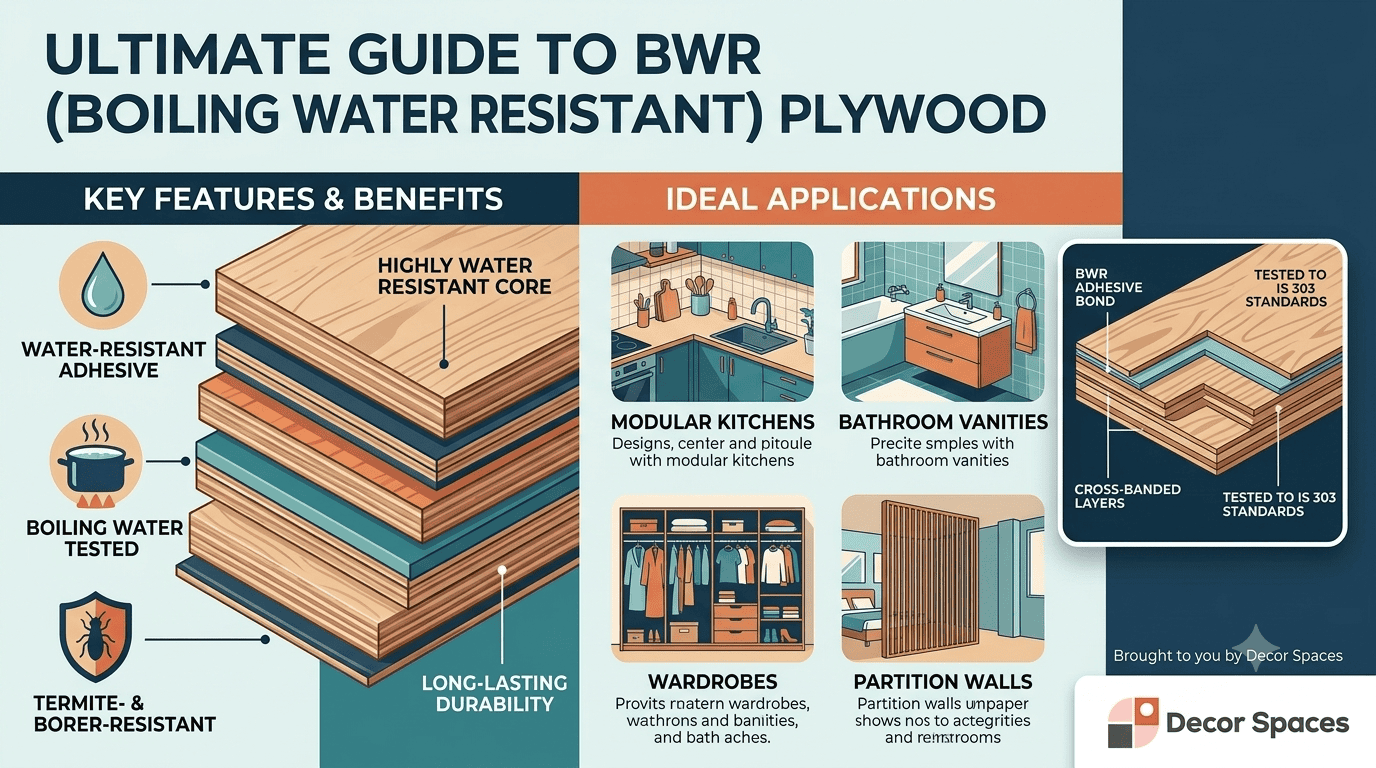
The BWR plywood meaning is Boiling Water Resistant — genuinely strong moisture resistance without the full boiling-water certification BWP carries. It costs ₹80–120/sq ft and is the practical, sensible choice for most home interior work outside direct wet zones.
BWR Plywood Meaning: How It Differs from BWP
Both grades use phenol formaldehyde resin, the same strong, water-resistant adhesive. The real difference lies in testing rigor: BWP undergoes an extended, full boiling water test without delaminating, while BWR is tested to a genuinely good but less intensive standard. In practical terms, this means BWR handles humidity and occasional moisture very well, but isn’t certified for the same level of direct, repeated water exposure BWP is built for.
BWR Plywood: Why It’s the Practical Default
- Wardrobes throughout the home — genuinely sufficient protection against Chennai’s ambient humidity, without paying for water resistance you don’t need in a bedroom.
- Kitchen cabinetry away from the sink — most of a kitchen’s cabinet area, aside from the immediate sink zone, is well served by BWR.
- Living room and general storage units — no meaningful moisture exposure, making BWR’s price point the sensible choice over BWP.
- TV units and study furniture — dry-area furniture that never needs BWP’s higher moisture certification.
Want the right grade specified room by room, not a single blanket choice for the whole home?
See our interior design services →BWR Plywood Price: What to Expect
| Grade | Price Range | Best For |
|---|---|---|
| MR | ₹60 – ₹90/sq ft | Very low-moisture, budget-conscious use |
| BWR | ₹80 – ₹120/sq ft | Most general home interior work |
| BWP | ₹100 – ₹160/sq ft | Direct wet-zone exposure only |
If a surface would get genuinely wet if you spilled water on it and walked away for a day, use BWP. If it would just sit in ambient humidity, BWR does the job well — and choosing BWR for the 80% of a home that doesn’t need BWP’s full protection is where real, sensible savings come from without compromising quality.
For where BWP genuinely earns its higher price, see our BWP plywood guide, or for the full grade-by-grade breakdown, our plywood guide.
Get the right plywood grade for every room — sensible spending, no compromises where it matters.
Book Free Site Visit →FAQs
What does BWR plywood mean?
Boiling Water Resistant plywood — bonded with phenol formaldehyde resin similar to BWP, but tested to a less rigorous standard, resisting water exposure well without BWP’s full boiling water test.
What is the difference between BWR and BWP plywood?
BWP undergoes a full, extended boiling water test without delaminating, suitable for direct, repeated water exposure. BWR resists moisture well but is tested less intensively, making it the practical choice for general interiors.
Is BWR plywood good enough for kitchens?
Genuinely suitable for most kitchen cabinetry away from direct water exposure. Areas immediately under the sink benefit from the additional protection BWP offers.
Related reading: BWP plywood guide · Plywood guide · HDHMR guide