BWP vs BWR Plywood — Which Grade Do You Need?
BWP vs BWR is the plywood grade question that comes up most often — and the answer genuinely changes room by room, not home by home. Here’s how to actually decide.
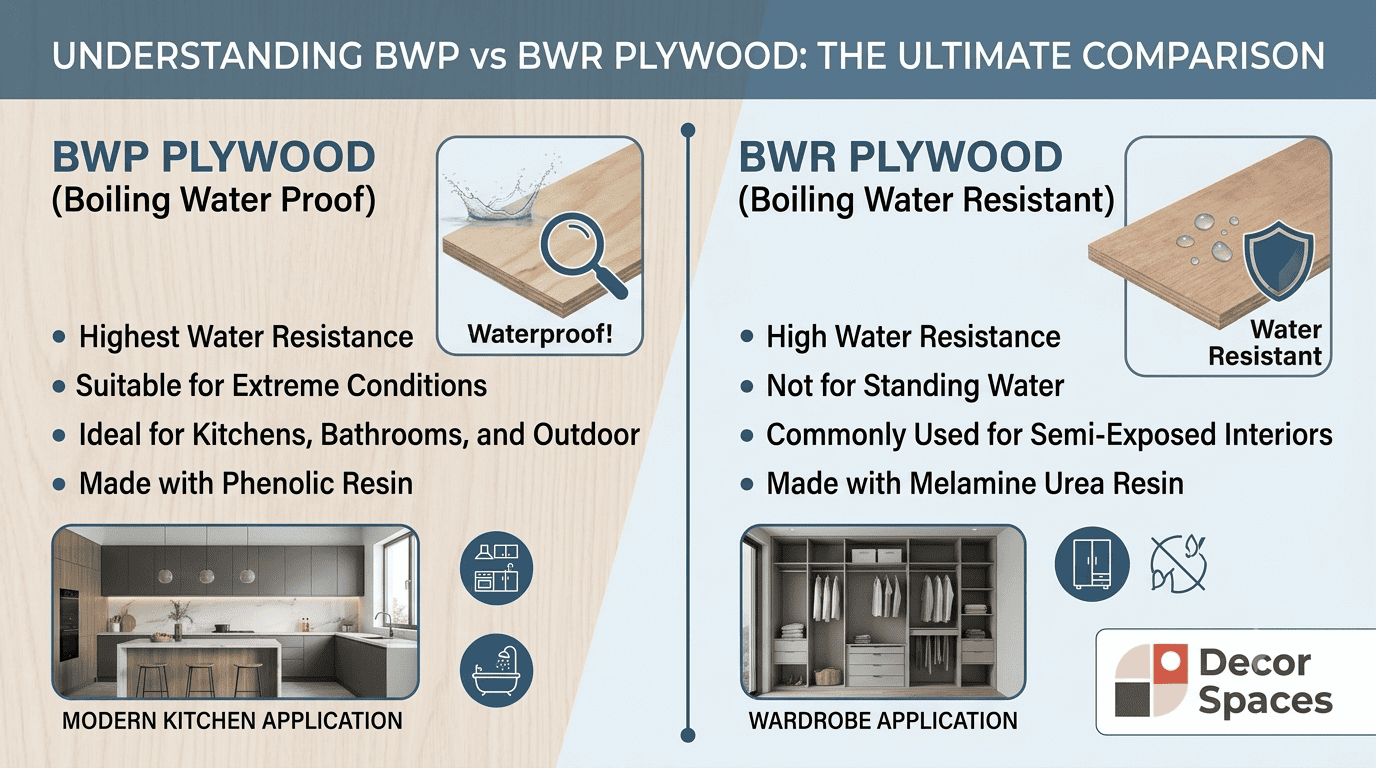
Use BWR for most of your home — wardrobes, general kitchen cabinetry, living room units. Use BWP specifically for direct wet-zone exposure — under the kitchen sink, bathroom cabinetry, utility areas.
BWP vs BWR: The Real Testing Difference
Both grades use the same strong phenol formaldehyde resin. The genuine difference is testing rigor: BWP is certified against an extended boiling-water test that BWR isn’t put through. BWR resists moisture and humidity very well, but is tested to a less intensive standard. In practice, this means BWR handles ambient humidity confidently, while BWP is specifically certified for direct, repeated water exposure.
| Factor | BWR | BWP |
|---|---|---|
| Test standard | Water resistant | Full boiling water test |
| Best for | Ambient humidity | Direct water exposure |
| Price (per sq ft) | ₹80 – ₹120 | ₹100 – ₹160 |
Want the right grade specified for every room, not a single blanket choice?
See our interior design services →BWP vs BWR: A Simple Rule of Thumb
A quick way to decide: picture the surface actually getting doused and staying wet for a while — a spill left unwiped, a splash zone. If that’s a realistic scenario, go with BWP. If the surface would only ever face everyday indoor humidity, BWR covers it comfortably.
- BWR: bedroom wardrobes, living room units, TV units, kitchen cabinetry away from the sink, study furniture.
- BWP: under-sink kitchen cabinets, bathroom cabinetry, utility area shelving, laundry cabinets.
Specifying BWP throughout an entire home is a common, avoidable overspend. Roughly 80% of a typical home’s cabinetry sits in ambient-humidity zones where BWR is genuinely sufficient — reserving BWP specifically for the 20% with direct water exposure is where sensible savings happen without cutting corners anywhere that matters.
BWP vs BWR: Room-by-Room Guidance
- Kitchen: BWR for most cabinetry, BWP specifically under and beside the sink.
- Bathroom: BWP throughout, given consistent direct moisture exposure.
- Bedrooms: BWR is sufficient for wardrobes in Chennai’s general humidity.
- Utility areas: BWP, given regular exposure from laundry and washing.
For the grade above both, see our marine plywood guide, or for the full picture, our plywood guide.
Get the right plywood grade specified room by room — sensible spending, no compromises.
Book Free Site Visit →FAQs
What is the difference between BWP and BWR plywood?
BWP is certified against an extended boiling-water test that proves the bond holds under sustained exposure. BWR resists moisture well but is tested to a less intensive standard. Both use phenol formaldehyde resin, but BWP is certified for more direct, repeated water exposure.
Should I use BWP or BWR for my kitchen?
BWR is generally sufficient for most kitchen cabinetry away from the sink. BWP is worth it specifically for cabinets directly under or beside the sink.
Is BWP worth the extra cost over BWR?
Depends on the application. For bathroom cabinetry and direct wet-zone exposure, yes. For bedroom wardrobes and general cabinetry away from water, BWR provides sufficient protection without the added cost.
Related reading: BWP plywood guide · BWR plywood guide · Plywood guide